Mostrando entradas con la etiqueta aire limpio. Mostrar todas las entradas

23 dic 2011

breathing construction: archytipe

Pioneering Timber Construction

Value: £450k; client: The Horniman Museum; complete: 1995


London Wildlife Trust Education Centre & Centre for Understanding the Environment, Horniman Museum Architype’s Centre for Understanding the Environment at the Horniman Museum in South London was built as an expressive, highly visual demonstration of ecological building. The design incorporates a natural passive ventilation system routed through large section hollow prefabricated timber beams and columns, integrating structure and services. The building collects rainwater, recycles its own greywater through reed beds, generates electricity through photo-voltaic cells, heats water through solar collectors, and utilizes the reed bed water for auditorium cooling
 
The centre won a ‘Green Building of the Year’ award in 1997
 
Our award winning and much loved centre for the London Wildlife Trust creates an idyllic garden within a residential street. The building itself was the first in the UK to employ a ‘breathing’ construction using recycled newspaper insulation. The orientation of the building is designed to maximise solar gain in autumn, winter and spring. In summer, natural through-ventilation is created and solar shade maximised. Non-toxic paints, stains and floor finishes are used throughout. 
 
Community Enterprise Times Environment Award, 1992; Green Building of the Year Awards Commendation, 1993

Value: £56k; client: London Wildlife Trust; complete: 1992

27 sept 2011

Wangari Maathai


1940-2011
It is with great sadness that the family of Professor Wangari Maathai announces her passing away on 25th September, 2011, at the Nairobi Hospital, after a prolonged and bravely borne struggle with cancer.
Professor Maathai's departure is untimely and a very great loss to all who knew her - as a mother, relative, co-worker, colleague, role model, and heroine; or who admired her determination to make the world a more peaceful, healthier, and better place.


intro

biography


Wangari Maathai shares the inspiring hummingbird story about how each of us can make a difference.


holistic development


taking root: the vision of Wangari Maathai

On receiving the news of being awarded the Nobel Peace Prize, 2004
“It is evident that many wars are fought over resources which are now becoming increasingly scarce. If we conserved our resources better, fighting over them would not then occur…so, protecting the global environment is directly related to securing peace…those of us who understand the complex concept of the environment have the burden to act. We must not tire, we must not give up, we must persist.”

Wangari Maathai was the founder of the Green Belt Movement, an environmentalist, a civil society and women's rights activist, and a former parliamentarian. You can read about her life and her organization in her books (see below). You can also scan condensed versions of her life and achievements, including being awarded the 2004 Nobel Peace Prize.


Since winning the Nobel Peace Prize, Wangari Maathai had become a spokesperson for a number of important initiatives.

Both before and since she won the Nobel Peace Prize, Wangari Maathai spoke about, and was interviewed on, a range of subjects. You can read these articles, interviews, and statements, by visiting the themed sections listed at the bottom of this page, and in the menu bar on the side of each page.


8 sept 2011

CRADLE TO CRADLE. CAPITULO 4. philosophy


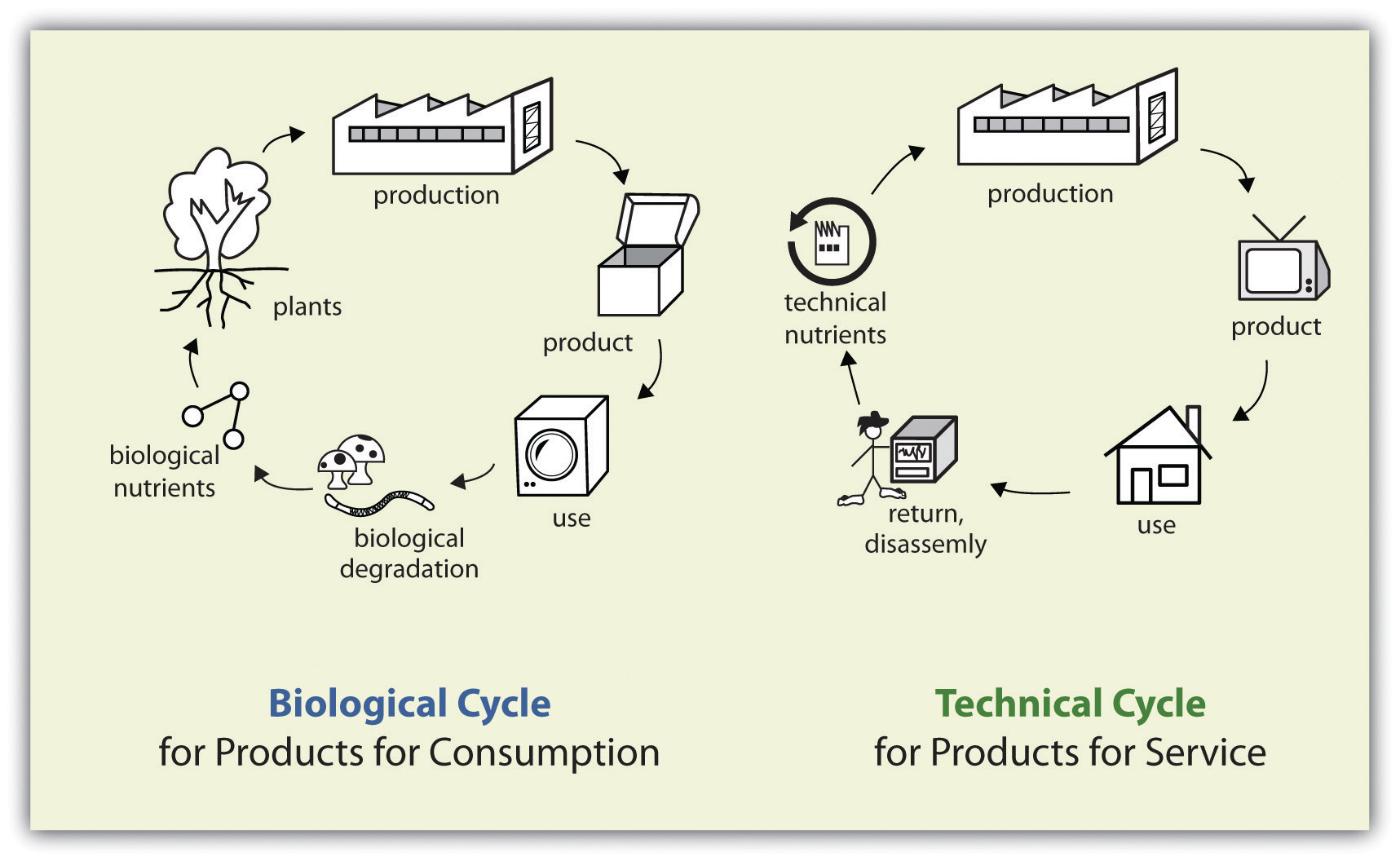
In the nature, flowers and leaves from Cherry tree fall off on the ground and become nutrients to the soil which are in turn absorbed back to plants. Ants get food from plants and also leave nutrients back to the plants. Therefore, human also can be a partner with the nature. Learn the biological cycle of the nature and make it the technical cycle.
We can design new products that can be decomposed after use and become nutrients to the Earth, or that can be reused to become a new material for a new product. No need to dispose, burn or bury under the ground; no more burden to the earth. We can color our world, not to destroy it. 


Why Being "Less bad" is No Good

After a long term of efforts, environmentalists suggested many methods that can decrease the damage to the environment from the industry. Reduce, Reuse, Recycle and Restrictions, these are the “less bad” policy. Most people think Reduceis the best method that can satisfy the ecology, but no matter how much toxic waste is reduced from the process, emission is limited or raw materials are cut down, none of them can prevent the earth from being destroyed by the waste, it just postpones the time of destruction. Even there is just a little amount of dangerous emission, it will affect the biological system and harm the world. For example, there are 100,000 people die annually in the US since 1995 because of tiny particles. No kidding.


Reuse seems to provide a means for the waste to go “away”, but if the waste contains toxic contaminants, it will come back in another form. In developing countries, people will recycle sewage sludge into animal food. Normally, the sewage sludge contains heavy metals, dioxins and endocrine disrupters. When sewage sludge is used to farm or fertilize plants, flowers or vegetables, the harmful substances would go into the animals and our body.
For recycling, is it good for the environment? It depends on what kind of items is being recycled. Most book or magazine publishers, they usually use fancy and colorful papers to attract consumers to buy their products, and they never think about environmentalism. After the fancy and colorful papers are recycled, factories need to put a large amount of bleach and other chemical processes to make them blank so that they can be reused. Also, the fibers of the recycled papers are short and less smooth than virgin paper, so small particles will be easily released into the air and inhaled into human body. Some people get allergies from newspapers because most newspapers are made from recycled paper.

Governments play as a guardian and regulator; they force companies to regulate their products to conform to their rules under punishment, but less rewards are granted to the companies who take initiatives. The point is, if they follow the rule, they need to pay more and more money to regulate their products. Therefore, companies will never be ardent to solve the problem and will not make any effort or spend more time to work for a new design. It in turn makes companies legally pollute the area by their thoughtless designs.

The concept of eco-efficiency in the public is creating more goods and services, while using fewer resources and creating less waste and pollution. Unfortunately, Eco-efficiency is not a perfect concept because it doesn’t reach deep enough. We can not rely on eco-efficiency to save the environment. In the long term, it will let the industry finish off all the resources. For instance, one of the energy-efficient building in Germany, it successfully decreases the number of the standard rate of oil used. It achieves a better insulation – less air comes into the building. On the other hand, due to smaller and lack-proof windows, it reduces air-exchange rate, and increases the poor indoor air pollution. In turn, more air-freshener machines are needed in the room and more money has to be spent on electricity. At the same time, more fossil fuel is used to transform into electrical power.

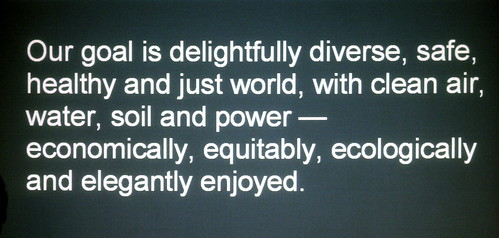
Our goal is zero waste and zero emission. “Be less bad” is a failure, because it will keep producing a bad design and destruct the environmental system.


Eco-effectiveness

For generation after generation, a Cherry Tree will grow flowers, fruits and await an animal to eat its fruit and drop down the seed somewhere else so as to grow another Cherry Tree. No one will complain the flowers falling all over the ground, and think the flowers are wasted. In fact, the flowers, fruits and leaves of a tree will decompose and break down into nutrients for soil, plants, insect and animals. This process is a zero burden to the nature. Can the house human build become a zero burden to the nature like the Cherry Tree?


Let’s compare the big energy saving eco-efficient house that human build and the house by Cherry Tree, and see if Cherry Tree can build a house like human. The human-built house will have a closed window to minimize air infiltration. A better thermal insulation system can prevent cold or warm air loss, so human will use dark-tinted glass for windows to prevent excessive use of air-conditioning as sun light directly enters the room heating up the temperature. Hence, the electricity cost is reduced, less fossil fuel energy is used by the power plant, and less emission is released and causes air pollution. As a result, the house will be energy saving and environmental friendly.

For the house built by Cherry Tree, Sun-light enters the house during the day-time. With an open and un-tinted window, fresh air will cool down and flow around the house. At night, the cool evening air will decrease the room temperature and re-fresh around house. There are layers of soil with grass covering the building roof. It can be a new home for animals and birds. Also, it can absorb rain to cool down the house temperature and prevent ultraviolet.

Both houses function as energy-efficient, but the Cherry Tree one design is more complicated for people working there.


It might sound strange to build a house by using nature system, but back in the time in Europe, there were a lot of old farms that was built with stones, wood and sod. Grass was placed on top of the roof as well. One of the projects the author did was building a garden on the roof of Chicago’s City Hall. After the project was done, Mayor Richard Daley predicted all house roofs in the whole city would become all green similar to the one of Chicago’s City Hall. The functions of the green roof are to provide a new home for many birds and other animals, cool down the temperature of the building, and flower, and to grow plant and food by natural sun light.
The good design should be:

1. Building that, like trees, produce more energy than they consume and purify their own waste water.
2. Factories that produce effluents that are drinking water.
3. Products that, when their useful life is over, do not become useless waste but can be tossed onto the ground to decompose and become food for plants and animals and nutrients for soil; or, alternately, that can return to industrial cycles to supply high-quality raw materials for new products.
4. Billions, even trillions, of dollars’ worth of material accrued for human and natural purposes each year
5. Transportation that improves the quality of life while delivering goods and services.
6. A world of abundance, not one of limits, pollutions, and waste.


A good design should consider different factors, it can not just concentrate on its own profitability. We can conceptualize and creatively examine a proposed design based on a visualization tool. The tool is a graph of triangle. 


First, the bottom right is the area of Economy. In this area, we can think about whether a manufacturing design is based on its own profitability. If the answer is yes, then it is not a good design. Second, the area between Economy and Equity is the question about whether a manufactory pays a reasonable amount of salary to its workers? Is it good enough to maintain workers’ living standard? Third, the area of Equity, does the manufactory pay an equal salary between male and female? Fourth, the area between Equity and Ecology, will the workers absorb toxic chemicals during the production in the factory? Fifth, the top area of Ecology, does it apply the rule of nature during the process of production? Waste equals food?Finally, the area between Ecology and Economy, does the factory wants to cut down the cost of design to produce a product that will damage the environment? This is a valuable tool to help manufactories reconsider their design of products.

25 ago 2011

Aire limpio y plantas: listado de las 11 más efectivas


Sustancias tóxicas en nuestros hogares 

Las plantas de interior ayudan a limpiar el aire de la casa al reducir la concentración interior de tóxicos presentes en las viviendas. Según un estudio realizado por Greenpeace en una muestra representativa de hogares, ¡en el polvo de las casas europeas se hallan de 70 a 100 sustancias químicas tóxicas distintas! Mientras tanto la tecnología no cesa de desarrollar productos químicos tóxicos para los seres vivos (incluidos nosotros), y el ámbito doméstico no es una excepción. Desde materiales de construcción (que paradójicamente destruyen el medioambiente), pasando por los disolventes usados en la mayoría de pinturas y barnices convencionales, hasta los productos de limpieza (nombre desafortunado si consideramos que ensucian el entorno), sin olvidar alfombras y tapicerías sintéticas. Si a este cóctel químico añadimos el hermetismo de muchas viviendas y la falta de hábito de ventilación natural, no es de extrañar que la contaminación del aire interior haya generado el fenómeno conocido como “síndrome del edificio enfermo”, conjunto de síntomas que pueden aparecer al pasar mucho tiempo en edificios con dichas condiciones. Pues bien, todas las plantas de interior ayudan a purificar el aire de una vivienda, pero además algunas son capaces de absorber los gases emitidos por pinturas frescas u ordenadores, por ejemplo.


Plantas que absorben formaldehído, xileno, y otros tóxicos del aire doméstico

El formaldehído (el tóxico más abundante en el aire de los espacios interiores y cuya exposición prolongada a baja concentración puede producir cáncer), el benceno, el xileno, el tricloroetileno, entre muchos otros compuestos orgánicos volátiles tóxicos, son absorbidos por las hojas de algunas plantas, en mayor cantidad cuanto mayor es la superficie de intercambio del follaje.

El formaldehído está presente en diversas resinas y se usa para tratar muchos productos de consumo, incluso bolsas de basura, toallas de papel, pañuelos de papel, telas, ropa antiarrugas, base de las alfombras, revestimientos para suelos, adhesivos, etc. Se utiliza en materiales para la construcción como el contrachapado, el aglomerado y los paneles. Las cocinas de gas también liberan formaldehído. Se sabe que absorben cantidades importantes del formaldehído presente en el aire especies como drácena o tronco de Brasil (Dracaena sp.), ficus (Ficus robusta),  hiedra (Hedera helix), espatifilo (Spathiphyllum sp.), palmera (Chamaedorea elegans), difembaquia, aglaonema (Aglaonema sp.), cinta (Chlorophytum comosum), filodendro (Philodendron sp), potos (Epipremnum aureum), entre otras. Las destacadas en eliminar xileno y tolueno son, por ejemplo, la palmera areca, la drácena, la diefembaquia y el espatifilo. La cinta, el ficus y el rododendro eliminan el dióxido de carbono del humo del tabaco y el formaldehído que desprende la cola de maderas algomeradas y empapelados.


Comida para los microorganismos

Además, se ha demostrado que las sustancias orgánicas volátiles no dañan a las plantas, ¡sino que alimentan a los microorganismos que viven alrededor de sus raíces!, pues están adaptados para metabolizar estos compuestos. Por sus hojas (a través de los poros microscópicos –estomas- usados para su transpiración) captan del aire sustancias perniciosas, las transportan hasta sus raíces, donde residen microorganismos (como Pseudomonas sp.) que no sólo las descomponen de tal forma que su toxicidad desaparece, sino que las hacen disponibles para que puedan ser utilizadas como fuente de alimento para los microorganismos y la propia planta. En definitiva, las plantas representan un eslabón importantísimo entre el aire y el suelo realizando una extraordinaria labor descontaminadora del aire.

Los 11 mejores filtros verdes de aire*


FICUS (Ficus robusta)
Origen: India y Malaya.
Cuidados: Muy pocos, no tolera el exceso de agua. Es una de las plantas de interior más habituales porque tolera condiciones de luz tenue y temperaturas frías, además de presentar una gran resistencia ante las plagas. Sobrevive con menos luz que la mayoría de plantas de su tamaño.
Ambiente: Una temperatura entre 16 y 27ºC y en penumbra son sus condiciones óptimas.
Sustancias que elimina: especialmente eficaz en la eliminación de formaldehído (a un ritmo de 12 μg/h).
Indicadas en: habitaciones recién amuebladas y en todos los lugares cerrados en general.
Curiosidad: Con unas condiciones adecuadas, puede llegar a alcanzar una altura de 2,5 m. Muy apreciada por los diseñadores por su valor estético y su facilidad de cultivo.


DRÁCENA o TRONCO DE BRASIL (Dracaena marginata, Dracaena deremensis y Dracaena fragans “massangeana”)
Origen: Islas Canarias, África, Asia y Madagascar.
Cuidados: Pocos. Necesitan humedad y luz indirecta. Muy resistente.
Ambiente: Cálido y húmedo (entre 16 y 24 ºC) y en penumbra.
Sustancias que elimina: formaldehído y xileno. Dracaena deremensis “Janet Craig” es una de las plantas más eficaces en la eliminación del tricloroetileno, mientras que Dracaena deremensis “Warneckei” es especialmente eficaz en la eliminación del benceno. Dracaena marginata es de las plantas más eficaces en lo que respeta a la absorción de xileno y tricloroetileno. Dracaena fragans “massangeana” es excepcionalmente eficaz en la eliminación del formaldehído.
Indicadas en: Habitaciones recién amuebladas o pintadas, porque filtran formaldehído y xileno.
Curiosidad: Dracaena fragans “massangeana” puede crecer hasta 3 m. Para estimularle un nuevo crecimiento o para rejuvenecer una planta vieja, es recomendable podarla hasta unos 20 cm.


HIEDRA (Hedera helix)
Origen: Asia, Europa y África del Norte.
Cuidados: Necesitan mucha luz y riego moderado. Pero no les sientan bien las altas temperaturas.
Ambiente: Entre 10 y 21ºC.
Sustancias que elimina: 12 μg/h de formaldehído, tricloroetileno y benceno. Filtra hasta el 90% del benceno de una habitación cerrada.
Indicadas en: La oficina, junto a equipos plásticos (como los ordenadores, fax, etc.).
Curiosidad: Puede beneficiarse de estar en el exterior durante algún período en primavera o en verano.


ESPATIFILO (Spathiphyllum sp.)
Origen: Colombia y Venezuela.
Cuidados: Necesita bastante humedad.
Ambiente: Entre 13 y 24ºC.
Sustancias que elimina: 8 μg/h de xileno y tolueno, y 10 μg/h de formaldehído. También eficaz en la eliminación de alcoholes, acetona, tricloroetileno y benceno.
Indicadas en: Habitaciones recién amuebladas.
Curiosidad: Es una de las pocas plantas que florecen perfectamente en los interiores.


POTOS (Epipremnum aureum)
Origen: Islas Salomón.
Cuidados: Apenas necesita. Es la planta más fácil de cultivar de todas las de interior. Tolera la amplia variedad de condiciones ambientales del hogar y la oficina.
Ambiente: Húmedo y claro. Temperatura entre 18 y 24ºC.
Sustancias que elimina: Formaldehído.
Indicadas en: Habitaciones recién pintadas o amuebladas.
Curiosidad: Su fácil cultivo y mantenimiento y su resistencia hacen del potos una de las mejores opciones para los que no saben mucho de jardinería. A diferencia de muchas plantas de interior, no pierde la variedad de sus colores cuando está en un lugar oscuro.


FILODENDRO (Philodendron sp.)
Origen: Sudamérica.
Cuidados: Prefiere una temperatura cálida y humedad. Philodendron erubescens es una de las plantas de interior más fáciles de mantener.
Ambiente: Mucha luz. Si no tiene luz, pierde la flor. Temperatura (16-21ºC es el rango óptimo) y humedad elevadas.
Sustancias que elimina: Gran cantidad de formaldehído.
Indicadas en: Habitaciones poco ventiladas o amuebladas recientemente.
Curiosidad: Philodendron erubescens fue introducido como una planta de interior en torno al año 1900 y Philodendron oxycardium (que puede alcanzar una altura de 2 m) hacia 1850, ambas variedades de enredadera muy comunes.


DIFEMBAQUIA (Dieffembachia compacta)
Origen: América tropical Central y del Sur.
Cuidados: No requiere excesiva atención. Es resistente, pues tolera temperaturas de hasta 9ºC durante cortos períodos de tiempo.
Ambiente: Media luz y una temperatura de 16 a 27ºC.
Sustancias que elimina: Alrededor de 10 μg/h de xileno y tolueno, y 5 μg/h de formaldehído.
Indicadas en: Oficinas y en cualquier ambiente en general.
Curiosidad: Su nombre común en inglés, literalmente “planta muda”, proviene del adormecimiento temporal de la lengua y de las cuerdas vocales provocado al masticar cualquier parte de la planta, porque su savia contiene oxalato de calcio. ¡La pérdida de voz puede durar varios días!


PALMERAS
Cuidados: Fácil de mantener porque se adapta a lugares con poca luz y  escasa humedad, condiciones propias de la mayoría de edificios.
Indicadas: Junto a muebles nuevos o recién barnizados.
-Camedorea (Chamaedorea elegans)
Origen: México y Guatemala.
Ambiente: Entre 20 y 27ºC. Media luz.
Sustancias que elimina: 14 μg/h de formaldehído y de benceno. También filtra cloroetileno.
Curiosidad: Si se siente feliz en el lugar donde está y con las condiciones de cultivo, puede llegar a producir flores durante todo el año.
-Palmera Areca (Chrysalidocarpus lutescens)
Origen: Madagascar.
Ambiente: 18-24ºC.
Sustancias que elimina: 10 μg/h de formaldehído, y 19 μg/h de xileno y tolueno. La areca es valorada como una de las mejores plantas de interior en lo que respeta a la eliminación de todas las toxinas del aire con que se han hecho pruebas.
Curiosidad: Libera copiosas cantidades de humedad en el aire. En el interior de la casa, una palmera areca de 1,8 m transpira aproximadamente 1 litro de agua cada 24 horas.

 
CINTA (Chlorophytum comosum):
Origen: Sudáfrica.
Cuidados: Muy fáciles de mantener.
Ambiente: Entre 13 y 24ºC.
Sustancias que elimina: 7 μg/h de xileno y 4,5 μg/h de formaldehído. Filtra el 96% de monóxido de carbono.
Indicadas: Tanto en cocinas donde se utiliza gas como en salones y comedores donde hay reuniones de mucha gente.
Curiosidad: En 1984 recibió especial atención a nivel mundial cuando la NASA dio a conocer por primera vez los hallazgos de unas investigaciones que mostraban la capacidad de esta planta de eliminar los contaminantes del aire en los interiores.


AGLAONEMA (Aglaonema sp.)
Origen: Sudeste asiático.
Cuidados: Apenas necesita atenciones. Es capaz de crecer en zonas escasamente iluminadas.
Ambiente: Entre 16 y 22ºC.
Sustancias que elimina: Formaldehído. Su índice de eliminación de toxinas de la atmósfera aumenta con la prolongación de su exposición.
Indicadas en: Habitaciones que den a calles con mucho tráfico.
Curiosidad: Después de la floración, produce unas bayas rojas venenosas.


SANSEVIERIA (Sansevieria trifasciata)
Origen: África occidental tropical e India.
Cuidados: Su facilidad para crecer y su resistencia a los insectos la convierten en la planta idónea para principiantes en el cultivo de plantas de interior. Requiere suelo húmedo, pero debe regarse con moderación.
Ambiente: 18-27ºC, semisol.
Sustancias que elimina: 2 μg/h de formaldehído
Curiosidad: A diferencia de la mayoría de plantas de interior, la sansevieria libera oxígeno y absorbe dióxido de carbono por la noche.


* Muchas  de las plantas de jardinería, como las citadas, tienen susbtancias naturales tóxicas para los seres humanos que pueden ser perjudiciales frente a un descuido con niños. En caso de tener niños en casa es recomendable consultar a su jardinero. Advertimos, sin embargo que los adultos entienden que las plantas ornamentales no son hortalizas y, por tanto, no son comestibles en ninguna de sus partes.


 + info en fundación terra


story of stuff


21 jul 2011

EASY GREEN CLEANERS

The above health issues are reason enough to make green cleaners, but just in case you need more reasons: homemade cleaners smell better, work just as well, cut down on packaging, and save you money. Lastly, this is a very simple green step you can take at home, yet the rewards are huge – cleaner indoor air quality and a healthy, happy family.

baby safe cleaners, cleaners, cleaning supplies, dangers, eco home
 cleaning, Green Cleaning, homemade green cleaning products, household 
dangers, safe non-toxic cleaners, toxic-chemicals

WHAT SUPPLIES YOU’LL NEED:

You need very few supplies to make homemade cleaning products. Most of the items you’ll need, you likely have around the house already…
  1. A few plain old spray bottles. You can purchase some, or clean out your old ones (the ones that had icky cleaners in them) and reuse them.
  2. Box of baking soda.
  3. Table salt.
  4. Bottle of white distilled vinegar.
  5. Good old plain tap H2O.
  6. Olive oil.
  7. Natural soap.
  8. Fresh lemons.
  9. Organic essential oil of tea tree, lavender, eucalyptus, lemongrass and rosemary. You don’t need all of them, but having at least a couple on hand is helpful. These are some of the best antiseptic and antibacterial essential oils, plus they smell great. If you’ve never used essential oils before, read Essential Oil Buying Guide and Essential Oil Safety Guide. It’s important that you understand that anyone can have a negative reaction to an essential oil. The posts above explain how to do a skin test – you don’t want to clean with an oil that affects you negatively.
  10. Some eco-friendly sponges or cloths. Or simply buy a pack of washcloths, use old cloth diapers, make cloths out of ripped clothes, and so on. If you’re going to clean green, you may as well ditch the paper towels while you’re at it.
baby safe cleaners,  cleaners,  cleaning supplies,  dangers,  eco 
home cleaning,  Green Cleaning,  homemade green cleaning products,  
household dangers,  safe non-toxic cleaners,  toxic-chemicals

EASY, GREEN CLEANING SUPPLY RECIPES:

Window wash: Many people who are die-hard into green cleaning love vinegar and water as a window wash. Simply mix 3 tablespoons vinegar with 2 cups of water (or for a bigger job – 1/2 cup vinegar to 1 gallon water) and spray right on your windows. Vinegar works great on glass, it’s true, however I can’t stand the smell of vinegar, so I hunted down an alternative years ago. You can also use straight fresh lemon juice or club soda to get your windows and other glass items sparkling clean. Spritz your glass with club soda and scrub with recycled newspaper. If you use straight lemon juice use a lint-free cloth to scrub with.

All-purpose disinfectant: Mix 2 cups water, a few drops of natural soap, and 15 drops each of tea tree and lavender organic essential oil. You can spray this on all kinds of home surfaces – changing tables, cutting boards, toilets, sinks, walls, and more. Just don’t use this on glass, as it will streak. This basic cleaner is so safe and gentle you could literally spray it on your kids, and they’d be fine. I do suggest baths over disinfecting the kiddos though 
Scrubbing toilets: Drizzle your toilet bowl with vinegar, lemon juice, or spray on some of your all-purpose disinfectant. Sprinkle with baking soda. Let it sit for 10 minutes. Scrub with toilet brush. This mix will also clean sinks perfectly.

Fast non-toxic oven cleaning: You don’t want to use conventional oven cleaners – any product that requires open windows and gloves to use, is not ok to use around your kids (or yourself). The best tip is to not wait to clean your oven when it gets dirty. An old stain is harder to clean. To clean oven stains naturally, sprinkle table salt liberally on the hot spill before your oven cools down. Allow the oven to cool. Grab a damp cloth and rub off the spill.

Mold fighter: Mold is extremely harmful to human lungs. The problem is that once you have mold, you have it, and it can be almost impossible, if not totally impossible to get rid of. Prevention is key. To fight mold from ever occurring, mix two cups of water and three drops of pure organic tea tree essential oil. Once a week, spray your walls with this solution (even behind furniture) and wipe dry. This mixture fights stains and the natural antiseptic qualities of tea tree oil fights mold and mildew.

How to Green Clean Your Bathroom Without Toxic Chemicals!


No one likes cleaning the bathroom; hair-clogged drains, moisture-loving mildew, and, ahem, the toilet all make for an unpleasant chore. No doubt your first priority when cleaning the loo is eliminating germs and soap scum, but it’s important to steer clear of harsh chemicals that can linger in the air and water, and irritate your skin, lungs and mucous membranes. Just like in the kitchen, most popular disinfecting household cleansers are chock full of harmful chemicals. The EPA classifies 275 of the antibacterial agents commonly used in cleaners as pesticides, some of which have been linked to serious health problems. In the bathroom, we’re constantly coming in contact with all kinds of surfaces, so these toxins can easily get on your skin, and with the next flush of the toilet, the chemicals will flow into the wastewater system, where they can seep into the ground. With diligence and earth-friendly products, you can keep your bathroom clean — and safe — without harsh chemicals.


The Porcelain Throne – How to green clean your toilet
There’s no need to reach for the bleach to get your toilet sparkling white. Homemade, non-toxic bathroom cleaners can de-stain just as well. For a spotless toilet, mix together half a cup of vinegar and a spoonful of baking soda. Pour the mixture into the toilet bowl and let sit for about 30 minutes before scrubbing. Repeat once a week. For a simpler one-stop solution, we highly recommend Method’s Lil Bowl Blu. The bleach-free formula detoxes your toilet using lactic acid, naturally removing rings and that gross brown calcium build-up.


Shower & Tub – How to green clean your bathtub & shower
Battle soap scum with baking-soda paste!
By mixing baking soda and all-natural dish soap, you can create an amazing scum-busting paste that rivals any store-bought bathroom scrub. The paste works wonders at removing soap scum from shower doors, as well as hard water and rust stains on ceramic tile. Use a sponge or cloth to rub the paste into the surface until stains are gone, then wipe clean with warm water. To tackle stains on the grout, scrub the area with a toothbrush using the same paste. The paste can be somewhat abrasive, so use sparingly on delicate surfaces.
Vinegar is a mold killer
To remove build up and mildew from the corners of your shower, spray the dirty areas with vinegar, and let it dry. Then spray again and wipe clean. The mild acidity of vinegar loosens the particles and kills bacteria. It’s much easier to prevent mold than to clean it, so it’s a good idea to spray down the shower after each use with a mixture of water and vinegar to prevent mold from settling in the first place.
A scummy plastic or vinyl shower curtain can be cleaned in a number of ways. If it’s not too bad, simply spritz it with a vinegar and water solution, then wipe clean. You can also wipe curtain with a damp sponge and baking soda. For tougher build up or mildew, you should take the curtain off the hooks and lay it on a flat surface so you can scrub it clean. You can also toss the shower curtain in the washing machine. Instead of your regular detergent, use 1/2 cup of baking soda and a few tablespoons of vinegar. Make sure to throw a couple towels in as well, to help rub the grime off.


Down the Drain – How to Green Clean Your Drain
One of the most common causes of a clogged bathroom drain is hair, and the thought of pulling out clumps of tangled locks makes most people run for the Drain-O. But common drain cleaners pack a toxic punch. They contain sodium hydroxide and sodium hypochlorite, which can cause permanent damage to skin and eyes on contact, and the vapors can burn lungs. Many also contain dimethyl benzyl ammonium chloride, a severe eye and skin irritant, and dichlorodifluoromethane (uh, what?), a neurotoxic eye irritant.
So instead of pouring poison down your drain (which can also leak into the environment), you should create your own, non-toxic drain cleaner with baking soda and vinegar. First, remove any visible debris. Then pour about a 3/4 cup of dry baking soda down the train, followed buy a 1/2 cup of vinegar. Immediately plug the drain with a stopper or rag, and let it sit. The reaction from the baking soda and vinegar will break down gunk. After about 30 minutes, pour boiling water down the drain.


Bathroom Vanity – How to green clean your sink
Many of the methods we mentioned for cleaning the bathtub can also work for cleaning the sink, but often it’s less grimy, so you don’t need to use a strong scrub. Instead, you can make a spray cleaner by mixing two cups of baking soda, 1/2 cup all-natural dish soap, 1 cup water, and 1/2 cup vinegar. The mixture will cut soap scum and grime on most surfaces. Polish fixtures with a mix of equal parts vinegar and baking soda, then rinse clean. Toothpaste also works wonders on chrome fixtures.
For a streak-free mirror, you can just use a clean, lint-free cloth and warm water. If you need a little more fighting power to breakdown the toothpaste splatters, mix equal parts water and white vinegar in a spray bottle, and spritz away. This solution can be used on all glass surfaces.


On the Floor
Bathroom mats can get really grimy, really quickly. Never leave a wet mat laying on the floor; after every shower, hang it over the shower rod so it can dry out. To keep a bathroom rug fresh, sprinkle it with baking soda. Let it sit for about 30 minutes — or however long it takes you to clean the rest of the bathroom –  then vacuum up the powder. This will help eliminate odors and allow you to machine wash the mat less frequently.
To clean a tile floor, mix 1/2 cup of baking soda into a warm bucket of water and mop as you normally would. Add a little bit of lemon juice for a fresh scent. If your bathroom floor is small, simply wipe it with the same spray cleaner you used on the sink — no need to mop.

A Note About Water
Using earth friendly cleaning products certainly is a step toward a better bathroom, but your green efforts will be totally negated if you’re wasting water. As the world’s population continues to increase, water scarcity is becoming a pressing issue. Many of us have no idea how much water we use, and it’s a resource we take for granted. From running the faucet while we brush our teeth to relaxing with a long hot shower, we waste a lot of water in the bathroom. By switching to low-flow fixtures, you can save thousands of gallons of water. If the average family of four swapped their normal shower head for a low-flow model, they would save more than 20,000 gallons of H2O each year. Plus, investing in water-saving technology will lower your bills. For a truly green bathroom, you need to put water conservation first.


5 Tips for a Cleaner, Greener Kitchen


Most people think that the bathroom is the dirtiest room in the house — it does have the toilet, after all. But for years now, experts have been telling us that our kitchens actually harbor more germs and bacteria than any other room in our homes, which actually makes a lot of sense. From food preparation to nasty spills, the kitchen is a high traffic area for germs — but don’t freak out and douse your whole kitchen in bleach. Common cleaning products, like chorine bleach, are full of harsh chemicals that can poison your indoor air and irritate skin and mucous membranes – not to mention seep into the ground and local water supply through improperly managed sewage systems. Plus, the toxins hang in the air and can permeate your food and stay on surfaces if you go overboard with harsh cleaning supplies. By practicing a few smart, eco-friendly cleaning habits, your kitchen can be toxin-free and sparkling like new in no time. Plus, to get you in a green cleaning mood, Method is offering a sweepstakes with the chance to win a home organizing consultation and a bucket of their awesome green cleansers.

Ditch the Disinfectant
Sure, disinfectant cleaners and antibacterial soaps are great at taking care of tough spills and caked on food, but do you actually know what’s actually in them? Herbicides, fungicides, and pesticides – not exactly something you want to be wiping all over your kitchen. The EPA classifies 275 of the antibacterial agents commonly used in cleaners as pesticides, some of which have been linked to serious health problems. Put it this way: if these chemicals are toxic enough to kill animals and microbes, do you really want to be spraying these concoctions inside your kitchen? A better choice is to opt for all-natural cleaners that are free of harmful chemicals and volatile organic compounds. Method takes pains to ensure that their cleansers and soaps are safe and sustainable. They do not use parabens, phosphates, ammonia, chlorine bleach, and a slew of other chemicals because of their known adverse side effects. You can also mix up your own line of eco-friendly cleaners with common items found in your kitchen, which brings us to our next tip.

You can clean just about any surface in your house with a few everyday products: baking soda, white vinegar, lemon juice, salt, and water. Baking soda is a miracle worker: mixed with a little bit of water, it does wonders on counter top spills, stains in the refrigerator, and a dirty tile floor. Add a little lemon juice for a citrusy scent. If your sink is clogged, pour 1/4 cup baking soda down the drain, followed by 1/2 cup of white vinegar. Let it sit for 20 minutes, then flush it with hot water. If grease is the culprit, use 1/2 cup salt and 1/2 cup baking soda and rinse with hot water.

For tough spots, like burnt food in the oven, resist the urge to reach for the industrial strength aerosol cleaners. Don’t even think about buying oven cleaner — it’s jam packed with toxic chemicals like lye, ethylene glycol, and methylene chloride that can burn your eyes, skin, and even your organs if you breathe it in. Instead, sprinkle about 1/4 inch of baking soda over the bottom of your oven, making sure that any stains or spills are completely covered. Over the next few hours, spray it with water every so often to keep it moist, then let it sit overnight. In the morning, the grime will easily scrape off with the baking soda.

Vinegar also works great as an all-purpose cleaner. It is mildly acidic so it wipes away grease, mildew, and coffee or wine stains. To clean a food covered microwave, place 1/4 cup vinegar and 1 cup water in a glass dish and microwave the mixture for two to three minutes, then let it stand for about 10 more. The steam and acidity will loosen the food particles, allowing them to be easily wiped off. Lemon juice can be used for nearly all the same purposes as vinegar.

Tackle Dirty Dishes
It’s easy to let dirty dishes pile up, but that’s a surefire way to fill your sink with germs. From used plates and silverware to dirt-filled rags, the sink sees a lot of grimy activity. Plus (if you do eat meat) there is the added concern of salmonella and E-coli from handling raw meat. The best way to eliminate the growth of germs and bacteria is to get in the habit of washing dishes right after you use them. Use a green, biodegradable dish soap like Method’s, and do not let the water run! The average faucet flows at 2 gallons per minute, so you’re wasting a TON of water if you leave it on while scrubbing. Regularly clean the drain (see above for a homemade solution) to flush out food particles. If you are blessed enough to have a dishwasher, rinse your dishes immediately, then place them in the washer. It’s best to run the dishwasher daily to avoid bacteria build up, but you should only run it when it is full or else you’re wasting a lot of water and energy. (For more information on the energy efficiency of hand washing vs. a dishwasher, our friends at Treehugger ran the numbers).

De-Germ Your Sponge
Reusable washcloths and sponges are definitely the greener choice for washing your dishes and wiping your counters, but they are hotbeds for germs and bacteria. In fact, the kitchen sponge is the number one source of germs in most houses. The moist, tiny crevices in a sponge that make it such an effective cleaning device are also perfect little homes for bacteria. Using a damp sponge just spreads germs from one surface to another. To avoid coating your dishes in bacteria, some people suggest soaking your sponge in a bleach and water solution, but that only succeeds in filling it with chemicals. Instead, boil your sponge for three minutes to kill germs between uses. You can also pop it in the microwave for two minutes, or run it through the dishwasher. For washcloths, let them dry completely after each use, as bacteria thrives in a moist environment. Washcloths should also be washed in the laundry machine and replaced at least once a week.


Take Preventative Measures
For a constantly clean kitchen, take care of messes as they happen. If raw egg gets on the counter, disinfect right away. If spaghetti splatters in the microwave, wipe it clean. If crumbs fall on the floor, sweep them up. Cleaning as you cook might add a couple extra minutes to your meal preparation, but it will save you time in the long run. Instead of spending an hour scrubbing dozens of sticky spots from your fridge every other week, it will only take you a minute to wipe up spilled juice. You should also be aware of expiration dates and clearly mark leftovers with the date they went into the fridge. Throw away old, spoiled food at least every two weeks to avoid mold colonies from taking root. Bacteria multiply at an alarming rate. A single cell can become more than 8 million in less than 24 hours, and just a few can make you sick. By cleaning as messes occur, you’re eliminating the chance for bacteria to grow, but, remember, if you’re using toxic cleaning supplies, you’re simply swapping dangerous bacteria for dangerous chemicals. For the cleanest, safest kitchen, always use all-natural cleansers.