Mostrando entradas con la etiqueta autosuficiencia. Mostrar todas las entradas

20 abr 2020

rob greenfield: Live simply and you will live free


Simple and Sustainable Living in My Tiny House 


Be the Change in the Messed up World | ​Rob ​Greenfield | TEDxIHEParis


My 44 Possessions: Everything I Own Fits in My Backpack | Minimalism


30 Days of Wearing My Trash


Rob Greenfield on Money, Health Insurance, Age and Death


Rob Greenfield is an adventurer, environmental activist, humanitarian, and dude making a difference. He is dedicated to leading the way to a more sustainable and just world.
Rob is the creator of The Food Waste Fiasco, a campaign that strives to end food waste and hunger in the U.S. He has dove into more than two thousand dumpsters across the United States to demonstrate how nearly half of all food in the U.S. is wasted while 50 million (1 in 7) Americans are food insecure.
Rob has cycled across the U.S. three times on a bamboo bicycle bringing his message of sustainability and earth-friendly living to the United States. His first bike ride across the U.S. is also a book, Dude Making a Difference.
In 2016 he landed in Rio, Brazil without a penny in his pocket. He was on a mission to travel to Panama, 7,000 miles and 7 countries away, while relying only on the goodness of humanity. This adventure is a six episode series called Free Ride on Discovery Channel playing worldwide. His travels have taken him to 6 continents and 45 countries.
Rob donates 100% of his media income to grassroots nonprofit organizations and his financial net worth is kept to a bare minimum. His financial vows are more than a list of resolutions, they speak to his steadfast commitment to live simply and live free. By living in this manner he aims to show that true happiness, health, and freedom do not come from an accumulation of money and possessions but rather from a deep connection to our surroundings, the earth’s resources that are freely available to us all, relationships, and love.
All of Rob’s extreme adventures and activism campaigns are meant to bring attention to important environmental and social issues and to inspire positive change. They may appear unattainable to some people but within them are an abundance of simple lessons and tips that can be adapted into any life to live in a manner that is beneficial to the earth, community, and self. Through his life he inspires others to make simple, small changes that grow into great change within them and society.
The Early Years
Rob grew up in the Northwoods of Wisconsin in the small town of Ashland and had a passion for the outdoors from a young age. He spent seven years in Boy Scouts and achieved the top rank of Eagle Scout. In 2005 he left his hometown to attend University of Wisconsin – La Crosse where he earned a Bachelors of Science with a major in Biology, minor in Chemistry, and a focus in Aquatic Science. During his summer breaks he worked 80+ hours per week selling educational books door-to-door and learned the skills of sales and marketing. In 2011 he moved to San Diego where he started his own marketing company, The Greenfield Group.
During much of Rob’s teens and early 20’s his life was focused on money, nice possessions, and the pursuit of women. He had the goal of being a millionaire by age 30. His life took a great turn when at the age of 24 he started to become aware of the environmental and social issues of his generation. He learned through books and documentaries that he was contributing to many of these problems through his daily actions including the food he was eating, the car he was driving, and the stuff he was buying and consuming. At that point he began his transformation from a Drunk Dude to Dude Making a Difference
He started with small changes such as shopping local, reducing the amount of trash he created, eating a more whole food, local diet, removing chemical products from his life, and using reusable bags and water bottles. Building on the success of these small changes he took greater leaps of change such as getting rid of his car, pulling all his money out of investments and banks harmful to the environment, and decreasing his dependency on money all together. Since he began his transformation he has adapted hundreds of small changes into his life in an effort to live for the benefit of many and to not harm the lives of any. In 2014 he canceled his last bill and since then has been living completely bill, debt, and credit card free. Over time he dissolved his company and started a nonprofit, Happy Healthy and Free.
Rob lived off the grid in a 50 square foot tiny home in San Diego, California. He grew his own food, lived purely on rain water (approximately two gallons per day), harnessed energy from the sun using solar panels, created near zero waste, and composted humanure (it is what it sounds like). After living this Teeny Greeny lifestyle for one year, Rob auctioned off his tiny house and raised enough money ($10,000) to build 10 tiny houses for people without homes in San Diego.
After five years of downsizing and simplifying his life he was down to just 111 possessions, all that fit into his backpack. He then traveled for two years in the service of others.
Rob is known by many as “The Trash man” for his month long project wherein he consumed like the average American for one month and wore all the trash he created.  The purpose of this project was to create a shocking visual of how much garbage just one person generates.
His third bike ride across the USA, Green Riders – Good Deeds on Bikes, was joined by over 30 others, planting gardens and doing good deeds across the USA.
In 2017 he moved to Orlando to embark on his current project to grow and forage 100% of his food for a year. He lives in a 100 square foot tiny house that he built with nearly exclusively second hand materials with friends. During this time, he illustrates alternatives to the wasteful globalized food system. He also explores whether it is possible to positively influence such a system while living outside it.
Rob’s adventures and his life have caught the attention of the world and he has been featured on thousands of media outlets including National Geographic, BBC, CBS This Morning, Discovery Channel, USA Today, LA Times, The Guardian, Huffington Post and many more.

Much more info at  robgreenfield.org

2 mar 2013

floating school in Makoko (Lagos) by NLÉ


NLÉ successfully completed test floating platforms in September 2012 (Image: NLÉ)
Completion of the base platfrom in November 2012 (Image: NLÉ)
The school uses approximately 256 plastic drums to float on the water  (Image: NLÉ)


The Makoko school design hopes to provide new living opportunities for the community (Imag...

Frame construction taking shape at the end of 2012 (Image: NLÉ)


Architecture has always had the ability to shape how we live our lives and our relationship with the surrounding environment. For the residents of Makoko, Lagos in Nigeria, the threat of flooding is a part of their daily existence, with the July 2012 floods in Nigeria killing 363 people and displacing over 2 million residents. Out of this devastation and the subsequent eviction of residents from slums built on the waterfront, a floating school and a floating town is being created in this water community, designed by NLÉ Architects.

The Makoko Floating School: a floating building prototype for African water communities
According to the architects, ‘pioneer sustainable development in coastal African cities’ 

The Makoko Floating School is built on a flotation platform and is being constructed using local materials.
 A 3-storey high wooden structure with space for rainwater storage, it also features PV cells and a playground and green area on the ground floor, together with two further classrooms on the first and second floor. 

Speaking to architect Kunlé Adeyemi of NLÉ about the design of the floating school, he said that using floating devices meant they were not relying on the total strength of the soil, as the soil around Makoko is particularly loose. He spoke of the adaptability of the design, as the water level changes frequently in the area so they 'wanted a design that would adapt to the changing conditions' and added that the area has now become a public, communal space with the community interested to see materials that they are familiar with used in a different way.

The project will source sustainable local materials (Image: NLÉ)

The design team has included a playground on the base level with a further two floors for ...


NLÉ's design hope to become a prototype model that can be replicated (Image: NLÉ)

If the prototype is successful, replicated structures could provide homes for over 100,000...

6 ene 2013

Tricycle House and Tricycle Garden


Designed by People’s Architecture Office (PAO) + People’s Industrial Design Office (PIDO), the Tricycle House and Tricyle Garden was designed to address the theme of the 2012 Get It Louder Exhibition. The inability to own land is a fundamental condition in China unique from many western countries. The Tricycle House suggests a future where the temporary relationship and the public nature between people and the land they occupy is embraced. 

The Tricycle House is also an experiment with folded plastic as a construction method. Using a CNC router each piece of the house is cut and scored flat and then folded and welded into shape. The plastic we use, polypropylene, is unique in that it can be folded without losing its strength. The house itself can therefore entirely open up to the outside, expand out like an accordion to increase space, and connect to other houses. The plastic is also translucent ensuring the interior is always well lit whether by the sun during the day or street lamps at night.
Through this design, single family homes can be affordable and sustainable, parking lots are not wasted at night, and traffic jams are acceptable. The Tricycle House is man powered allowing off-the-grid living. Facilities in the house include a sink and stove, a bathtub, a water tank, and furniture that can transform from a bed to a dining table and bench to a bench and counter top. The sink, stove, and bathtub can collapse into the front wall of the house.


10 sept 2012

msunduza dry toilet


The project area:
Swaziland is a small kingdom with a population of 1.2 million people located in southern Africa by the Mozambiqian and South-African border. Swaziland is experiencing a rapid urbanisation as people are fleeing the rural poverty and end up living in the informal areas around the cities.


Diarrheal diseases and insecurity:
In Msunduza, which is the oldest and the largest community of 16 000 inhabitants in the capital, Mbabane, sanitation solutions are diverse. The majority use a traditional pit latrine, but also a bucket or a “flying toilet”, where faeces are thrown into the environment. With children playing in the polluted streets, diarrhoeal diseases and cholera prevail. Additionally, insufficient sanitation causes social problems and security issues, especially to women and girls.

The project objectives are: :
• Improved sanitation hygiene and knowledge on sanitation
• Increased and more efficient composting and home gardening
• Improved livelihood and participation in the project area
• Sustainable and healthy sanitation culture

Dry toilets and environmental education:
Project activities include building dry toilets to households and to public places, improving hand washing possibilities, giving sanitation and hygiene education and encouraging home gardening and composting.
Thus far, the Msunduza Dry Sanitation Project has funded the construction of 33 toilets, and the environmental and sanitation education provided by the project has reached the inhabitants of Msunduza. The Project has also acted as a supporter for a youth group of one of the communities. In 2013 the project funding will reach its end. Focus of the last phase is to sustain the attainments of the project and to create a responsible exit strategy. This is mainly done through capacity building and by bringing together participants from different levels and sectors of the society.


Working experience from practicals:
Students from the Department of Sustainable Development in the Turku University of Applied Sciences have contributed to the project as part of their obligatory practical training. Students also receive valuable international working experience from working in a development cooperation project. Apart from practical training, Msunduza Dry Sanitation Project has been a topic for several Bachelor Theses and offered possibilities to work as a student assistant.


Benefits of dry sanitation:
Dry sanitation offers a sustainable solution for the improvement of sanitation for the disadvantaged. Dry toilets function without water, which has become scarcity in the regions battling with sanitation problems. Additionally, dry toilets provide a lucrative fertiliser turning waste into a resource.


Project implementation:
The Department of Sustainable Development in the Turku University of Applied Sciences has worked in Msunduza since the year 2004.
The Project is being implemented in cooperation with the Global Dry Toilet Association of Finland, Turku University of Applied Sciences and the Salvation Army in Swaziland as a local partner. The Project was initiated in 2007 and it is funded by the Ministry for Foreign Affairs of Finland.


The Msunduza Dry Sanitation Project 2007-2013


Msunduza is the oldest and partially informal township in Mbabane. The township of about 16 000 people is located close to the city centre on steep hills. The main features of the area are very steep topography, inadequate infrastructure and petty road network. The project is focusing on the poorest communities of Msunduza, where sanitation facilities are scarce and often in poor condition. The project implementation in Msunduza is done in collaboration with the Salvation Army of Swaziland and the Sanitation Experts, who are local volunteers trained to educate the communities of Msunduza. During the project, cooperation with the City Council of Mbabane, the local leaders of Msunduza and the University of Swaziland has been emphasized as well. In the unofficial areas of Msunduza, water and sewage systems are lacking and the waste management services are largely inadequate. Hence, the sanitation solutions are diverse as people use pit latrines, buckets or even plastic bags. In some areas wastewater from the water closets is piped into septic tanks, which flood in to the yards and streets, when emptying the tanks fails. With children playing in the polluted streets and due to the lacking awareness on environmental health, cholera and other diarrhoeal diseases prevail.
The aim of the project is to improve the poor sanitation and sanitation hygiene of the area. The project activities include e.g. building of dry toilets, disseminating information on safe sanitation and increasing awareness on the linkage between hygiene and health. In the long run, the aim is to increase composting, home gardening and, furthermore, to improve the food security of households through provision of composted material from the dry toilets as a fertilizer in home gardens. Improvement of hygiene and food security is essential in Swaziland, where 26 % of the people are HIV infected. The Swazi culture is also very traditional and male-dominated, thus the project also aims to improve the position of women and children in the community through environmental and hygiene education.


More Information:


MSUNDUZA DRY SANITATION PROJECT EVALUATION REPORT (2011)
Jonna Heikkilä
Turku University of Applied Sciences
jonna.heikkila@turkuamk.fi

27 sept 2011

Wangari Maathai


1940-2011
It is with great sadness that the family of Professor Wangari Maathai announces her passing away on 25th September, 2011, at the Nairobi Hospital, after a prolonged and bravely borne struggle with cancer.
Professor Maathai's departure is untimely and a very great loss to all who knew her - as a mother, relative, co-worker, colleague, role model, and heroine; or who admired her determination to make the world a more peaceful, healthier, and better place.


intro

biography


Wangari Maathai shares the inspiring hummingbird story about how each of us can make a difference.


holistic development


taking root: the vision of Wangari Maathai

On receiving the news of being awarded the Nobel Peace Prize, 2004
“It is evident that many wars are fought over resources which are now becoming increasingly scarce. If we conserved our resources better, fighting over them would not then occur…so, protecting the global environment is directly related to securing peace…those of us who understand the complex concept of the environment have the burden to act. We must not tire, we must not give up, we must persist.”

Wangari Maathai was the founder of the Green Belt Movement, an environmentalist, a civil society and women's rights activist, and a former parliamentarian. You can read about her life and her organization in her books (see below). You can also scan condensed versions of her life and achievements, including being awarded the 2004 Nobel Peace Prize.


Since winning the Nobel Peace Prize, Wangari Maathai had become a spokesperson for a number of important initiatives.

Both before and since she won the Nobel Peace Prize, Wangari Maathai spoke about, and was interviewed on, a range of subjects. You can read these articles, interviews, and statements, by visiting the themed sections listed at the bottom of this page, and in the menu bar on the side of each page.


5 sept 2011

refuncionalizar contenedores para convertirlos en edificios


ekuazion te ayuda
consulta aquí 

 
basándose en premisas ecológicas,
refuncionalizar contenedores para convertirlos en edificios
Ventajas frente al sistema tradicional:
Disminución del tiempo de construcción
Disminución del consumo de materiales
Disminución del consumo energético
Disminución de la emisión de gases
Disminución cantidad de residuos generados
Disminución del presupuesto final
Movilidad y Transportablidad
Flexibilidad


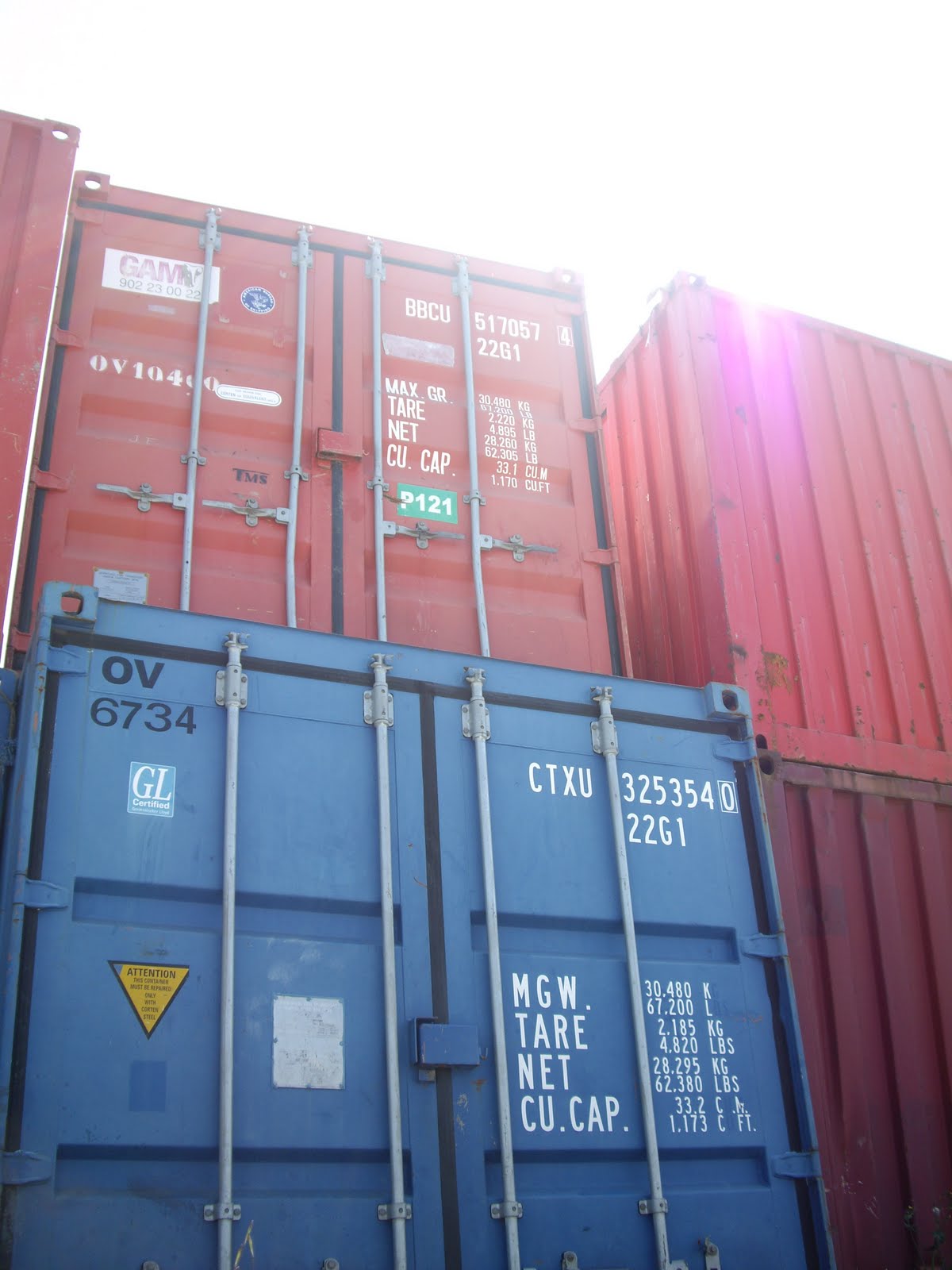
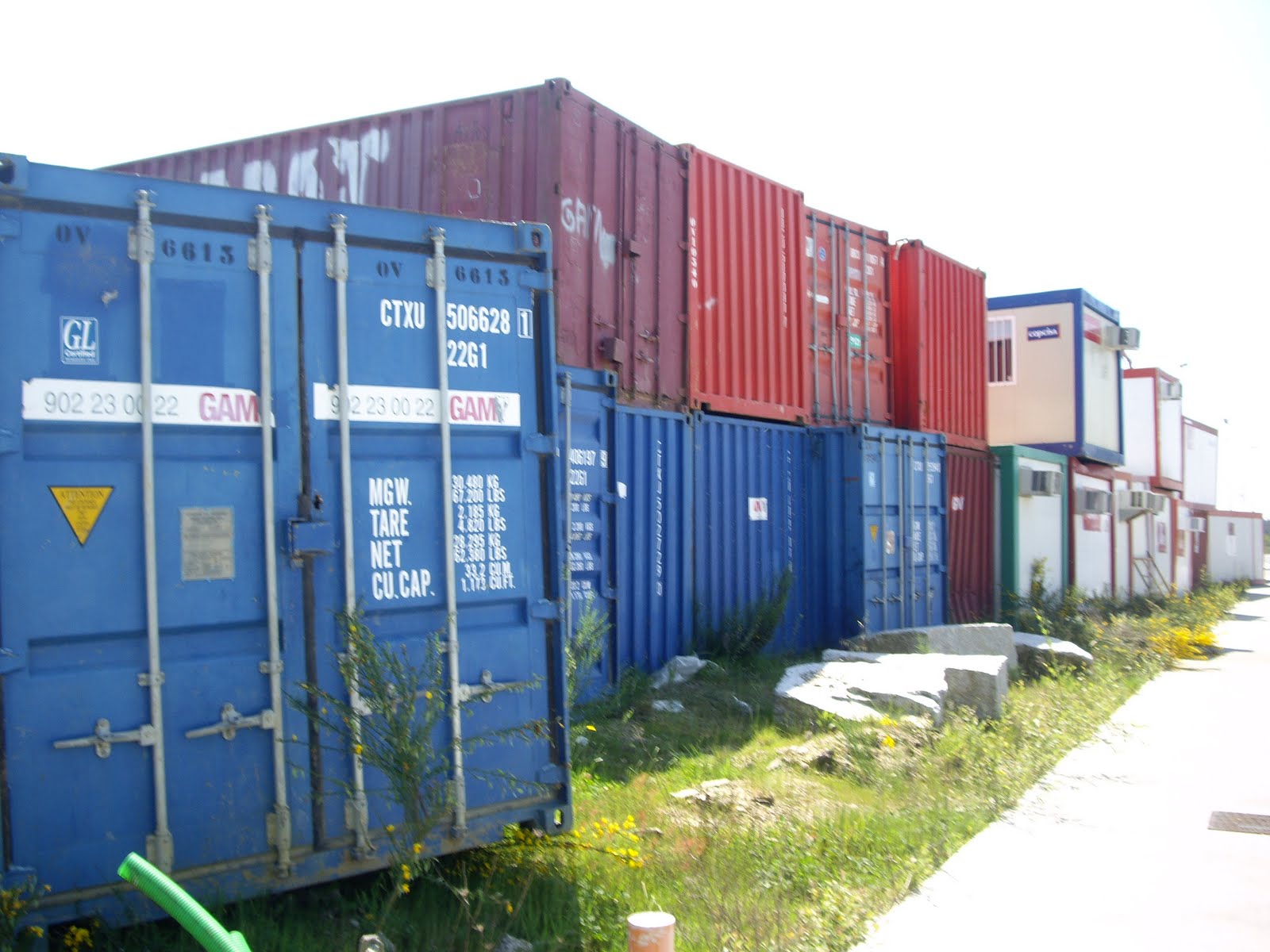
Cerca de tu ciudad existen depósitos de materiales como  los contenedores, considerados residuos por no poder continuar siendo útiles para el uso para el cual fueron diseñados.


Dándole una nueva función, se prolonga su vida útil y a la vez se reduce el coste en las partidas más elevadas dentro de un presupuesto tradicional.


Dependiendo de la concepción del edificio, en muchos casos, con este sistema de construcción, se reduce o elimina la necesidad de cimentación tradicional, reduciendo así el impacto sobre el terreno. 


Disminuye a su vez, el tiempo de ejecución, la cantidad de materiales empleados, la mano de obra necesaria, y la maquinaria y energía utilizadas.


La flexibilidad, transportabilidad y capacidad de poder apilarse fácilmente, son además características ideales para crear todo tipo de edificaciones. 

Para converitr estos elementos de carga en edificaciones realmente habitables, para poder adaptar (refuncionalizar) estas estrucuturas, hasta convertirlas en espacios  vivideros en base a la climatología del lugar y el uso para el que están destinados; hay que conocer las caracterísitcas técnicas de todos los componentes de los contenedores y los fundamentos de la arquitectura bioclimática


Para ello, y continuando con una visión ecológica, se debe hacer uso de las herraminentas bioclimáticas para que este sistema, durante su uso, nos garantice un consumo energético igual a cero (intercambiadores de calor, inercia térmica, orientación, protecciones, chimeneas de extracción y captación, efecto invernadero...) En el caso de ser necesario un aporte extra de energía, ésta debe provenir de fuentes limpias (eólica, solar, geotermia, biomasa...).Desde ekuazion proponemos/aconsejamos sistemas que tiendan hacia la autosuficiencia energética.


Otra característica destacable es su transportabilidad. Gracias a ella, las viviendas realizadas manteniendo esta caracterísitca, podrán ser consideradas bienes muebles (que al contrario que los bienes inmuebles, pueden ubicarse en fincas rústicas). 


Su mobilidad garantiza un grado de libertad impensable en la construcción tradicional, ya que siempre existe la opción de "llevarte la casa" contigo.


La flexibilidad de este sistema constructivo aporta al edificio la posibilidad de ir "creciendo" según las necesidades y las posibilidades del usuario.


La sencillez estructural del contenedor, la robustez del conjunto y la calidad de sus componentes garantiza que al final de su uso como edificio, aún se pueda emplear, reusar, reutilizar... para otra función (completo o por componentes) y por tanto prolongar así su ciclo de vida útil. La idea no es comprar un contenedor nuevo para crear el edificio, si no buscar uno que ya haya agotado su vida útil como contenedor de carga , pero todavía pueda cumplir su función como elemento arquitectónico. Así evitamos que pasen a ser  considerados directamente un residuo.


En definitiva, convertir un contenedor de carga marítimo en un edificio habitable y funcional puede convertirse en un excelente ejercicio de arquitectura ecológica, sostenible y bioclimática. Pero, para ello debemos enfocar las decisiones hacia la ecología analizando cada material y cada sistema constructivo teniendo en cuenta indicadores objetivos que aseguren una sostenibilidad real del conjunto.
port-a-bach - atelierworkshop
 
R4house - Luis de Garrido
cancer center - Amsterdam - MVRDV

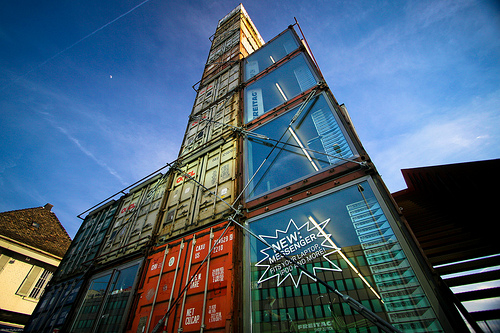
freitag flagship store - spillmann architekten

Para obtener un buen resultado se necesita un conocimiento exhaustivo de arquitectura, ecología y bioclimatismo. En el proceso de refuncionalización es imprescindible llevar a cabo acciones arquitectónicas basadas en decisiones técnicas que mejoren el comportamiento térmico y acústico, aprovechen la inercia térmica, dispongan de un correcto sistema de aislamiento, aseguren la transpirabilidad y la ventilación natural, garanticen la impermeabilización y eviten condensaciones, aseguren un correcto equilibrio electromagnético evliminando el efecto "jaula de Faraday", garanticen la recuperación, reparación y reutilización de los componentes optimicen al máximo los recursos y los materiales utilizados.


Puedes ver ejemplos en este blog, dentro de la etiqueta "CONTAINERS"

Algunos ejemplos:

¿Te gustaría vivir o trabajar en un edificio ejecutado con contenedores de carga? 

viviendas, oficinas, locales comerciales, bares, discotecas, hoteles, escuelas...

ekuazion te ayuda
consulta aquí