Mostrando entradas con la etiqueta biodegradable. Mostrar todas las entradas
Mostrando entradas con la etiqueta biodegradable. Mostrar todas las entradas
11 nov 2019


21 ago 2015
POO power
In early January 2013, Kenya’s oldest English-language school, the Maseno School, opened new dormitories for 720 students, and it had a couple of problems. Pit latrines and a faulty sewage system inevitably left foul odors and polluted local freshwater sources, while the kitchen used firewood for cooking fuel—unhealthy for cooks and the environment alike. High school senior, Leroy Mwasaru, now 17, and four of his friends had an idea: to harvest poop and other waste and turn it into a safe, clean and eco-friendly source of cooking fuel. Check out this video courtesy of Makeshift, and read on past the jump to learn more about the project!
What Mwasaru and his friends proposed was to build a Human Waste Bioreactor (HWB) that would harvest not only the waste from all the students in the dorm, but also organic waste from the kitchen, cow dung and slashing grass to create biogas for cooking fuel. As Grist explains, the HWB is “an underground chamber holds the human, animal, and kitchen excrement, while microorganisms go to work breaking down the muck. This process releases biogas, a source of renewable energy comprised mostly of methane, the same as the fossil fuel natural gas that powers most non-electric stoves in the U.S. The gas is contained in the HWB, ready for use as fuel.”
The final version of the HWB will cost around 7 million Kenyan Shillings ($85,000) to build and install, but Mwasaru estimates that it will cut the school’s cooking fuel costs in half while providing numerous benefits for the health of the local community and environment. After that? Mwasaru hopes to turn the project into it’s own company, charging customers according to their ability to pay, so as to provide clean fuel and sanitation services to poor or off-the-grid communities.




23 dic 2011
Biologically Inspired Engineering : SHRLIK
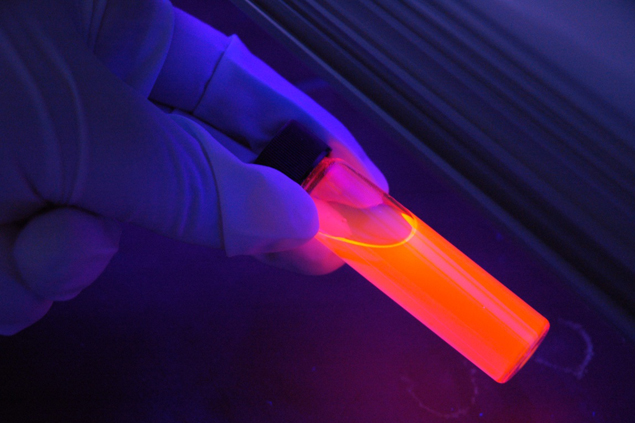
"Shrilk" could one day replace plastic in consumer
products, be used to suture wounds, and serve as scaffolding for tissue
regeneration.

Shrilk is similar in strength and toughness to an aluminum alloy, but it is only half the weight. Shown here is a replica of an insect wing, which was made with the new material.
BOSTON -- Researchers at the Wyss Institute for Biologically Inspired
Engineering at Harvard University have developed a new material that
replicates the exceptional strength, toughness, and versatility of one
of nature's more extraordinary substances -- insect cuticle. Also
low-cost, biodegradable, and biocompatible, the new material, called
"Shrilk," could one day replace plastics in consumer products and be
used safely in a variety of medical applications.

The research findings appear today in the online issue of Advanced
Materials. The work was conducted by Wyss Institute postdoctoral fellow,
Javier G. Fernandez, Ph.D., with Wyss Institute Founding Director
Donald Ingber, M.D., Ph.D. Ingber is the Judah Folkman Professor of
Vascular Biology at Harvard Medical School and Children's Hospital
Boston and is a Professor of Bioengineering at the Harvard School of
Engineering and Applied Sciences.
Natural insect cuticle, such as that found in the rigid exoskeleton
of a housefly or grasshopper, is uniquely suited to the challenge of
providing protection without adding weight or bulk. As such, it can
deflect external chemical and physical strains without damaging the
insect's internal components, while providing structure for the insect's
muscles and wings. It is so light that it doesn't inhibit flight and so
thin that it allows flexibility. Also remarkable is its ability to vary
its properties, from rigid along the insect's body segments and wings
to elastic along its limb joints.
Insect cuticle is a composite material consisting of layers of
chitin, a polysaccharide polymer, and protein organized in a laminar,
plywood-like structure. Mechanical and chemical interactions between
these materials provide the cuticle with its unique mechanical and
chemical properties. By studying these complex interactions and
recreating this unique chemistry and laminar design in the lab,
Fernandez and Ingber were able to engineer a thin, clear film that has
the same composition and structure as insect cuticle. The material is
called Shrilk because it is composed of fibroin protein from silk and
from chitin, which is commonly extracted from discarded shrimp shells.
Shrilk is similar in strength and toughness to an aluminum alloy, but
it is only half the weight. It is biodegradable and can be produced at a
very low cost, since chitin is readily available as a shrimp waste
product. It is also easily molded into complex shapes, such as tubes. By
controlling the water content in the fabrication process, the
researchers were even able to reproduce the wide variations in
stiffness, from elasticity to rigidity.
These attributes could have multiple applications. As a cheap,
environmentally safe alternative to plastic, Shrilk could be used to
make trash bags, packaging, and diapers that degrade quickly. As an
exceptionally strong, biocompatible material, it could be used to suture
wounds that bear high loads, such as in hernia repair, or as a scaffold
for tissue regeneration.
"When we talk about the Wyss Institute's mission to create
bioinspired materials and products, Shrilk is an example of what we have
in mind," said Ingber. "It has the potential to be both a solution to
some of today's most critical environmental problems and a stepping
stone toward significant medical advances."
For more information:
http://wyss.harvard.edu/
twig.mowatt@wyss.harvard.edu
http://wyss.harvard.edu/
twig.mowatt@wyss.harvard.edu
Suscribirse a:
Entradas (Atom)